
SMU Price Ranges: Sheet and plate markets tighten
Sheet and plate price indices increased between $5-20 per short ton (st) from last week.


Sheet and plate price indices increased between $5-20 per short ton (st) from last week.

JSW Steel USA CEO Rob Simon will join Steel Market Update (SMU) for a Community Chat on Wednesday, June 3, at 11 am ET.

US domestic steel prices continued to increase for most products as demand remained resilient amid tight supply. Domestic sheet and plate prices increased over the past month, while long products prices were mostly stable, with only structural and merchant bar prices edging up higher.
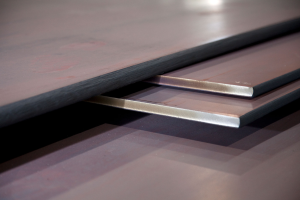
Domestic plate market participants named extended lead times, increased freight costs, escalating fuel surcharges, and spotty demand as their most recent challenges.
Sheet prices continue to rise in a market that remains characterized by extremely limited spot availability, solid demand, long lead times, and the lowest sheet inventories since May 2021.
The Commerce Department's International Trade Administration recently concluded several administrative reviews of the anti-dumping and countervailing duties (AD/CVDs) on various steel imports. The reviews resulted in the following duty adjustments.
Nucor Plate Group will maintain its previously announced fuel surcharge of $10 per short ton for next month, effective on all shipments beginning June 1.
Grupo Acerero SA de CV posted higher shipments and stronger profitability in the first quarter of 2026.

India-based JSW Steel’s combined US operations swung to a slight profit in its fiscal fourth quarter of 2026.

US service centers’ flat-rolled steel supply fell for a fourth straight month in April, with shipping days of supply slipping to 45.7 on an adjusted basis, according to SMU data.
SMU Survey: Sheet and plate lead times remain extended, according to buyers responding to our latest market survey.

Buyers continue to report mills are holding a firm grip on sheet and plate prices.
Algoma CEO forges new path against tariff headwinds

Plate market participants wonder how plate supply will hold up in coming weeks and months, sources told SMU. Some sources called out dwindling availability of heavier grades and said certain domestic producers have “a huge backlog.” of all grades.
Algoma Steel's loss widened in the first quarter as tariffs and the EAF transition impacted its bottom line.
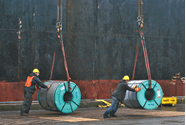
US steel exports improved in March but remain historically low, having trended lower for over a year now.
All five of SMU’s sheet and plate price indices ticked higher this week, rising further to new multi-year highs. Prices increased between $5-25 per short ton (st) from last week and are $30-65/st higher than they were one month ago.
In a May 11 price notice, SSAB upped its transaction prices for new, non-contract plate orders confirmed to ship from June 28 onward.
Plate market participants expect additional base price hikes from domestic mills, something that has some eyeing imports.
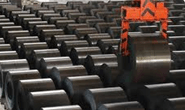
Following the historical lows seen in recent months, steel import volumes marginally increased in March and April.
Steel traders continue to report strong interest from North American buyers, with their import orders ticking higher, according to our latest survey results. Many manufacturers and service centers, however, report that they have not yet taken the bait.
Sheet and plate prices remained on an upward trend as industry sources increasingly asked whether improved demand might be driving the market as much as limited supply.
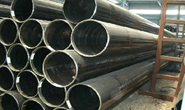
The Trump administration's invocation of the Defense Production Act authorizes the Department of Energy to use DPA tools to accelerate construction, expand domestic manufacturing capacity, and shore up critical supply chains – all areas with direct implications for steel.
Chinese major Baosteel will re-evaluate its investment in a steel plate making joint venture in Saudi Arabia because war in the Middle East has added uncertainties to the project, Baosteel Chairman Zou Jixin said.
Oregon Steel Mills (OSM) is attempting to push spot plate prices up by a minimum of $60 per short ton (st).
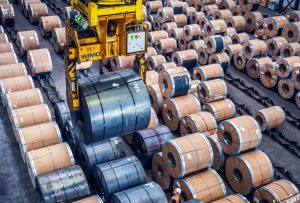
Steel mill lead times continue to hold at or near multi-year highs for both sheet and plate products, territory they have been in two months.
This week we saw low negotiation rates across all products, though coated products are the most negotiable and plate products are the least.
Market sources say 2026 could be a stronger year for plate market participants than 2025 if this week’s conditions are indicative of how the rest of the year plays out.
Each of SMU’s sheet and plate price indices climbed higher this week, with all products rising further to new multi-year highs.
Nucor executives said US steel demand remains stable, with pockets of strength in data centers, energy, border fence work, and infrastructure.